
- Formal rules of procedure or etiquette
- The rules of etiquette in internet communications and postings are called
Which of these rules of etiquette exists at every workplace?
Before you leave for vacation, set up your email autoresponder. This is an automatic response to every email you receive that lets the sender know you’re away and unable to read emails https://deusexmagnifica.com/david-bowie/. In your auto-response, mention the dates you will be out of the office and a colleague whom the sender may contact with urgent matters.
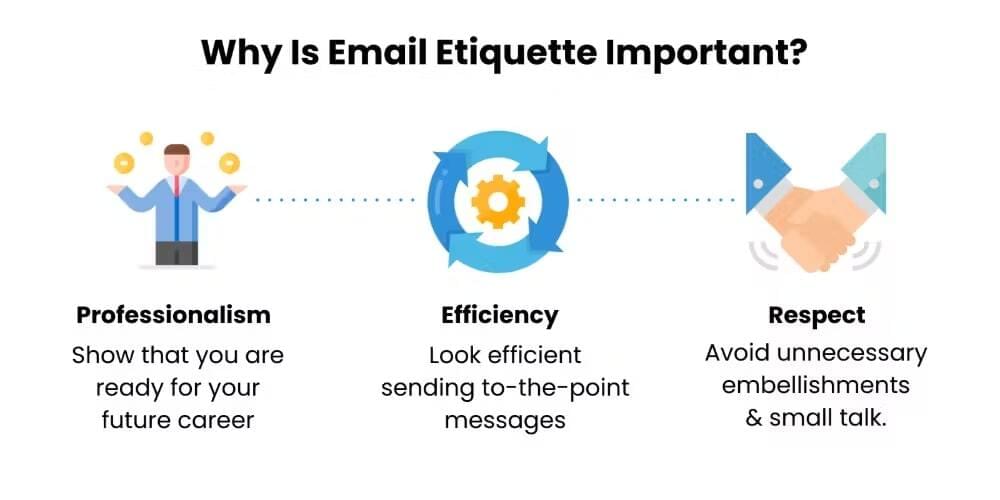
Email is a key tool for communication in both personal and professional settings. It is important to know how to write emails that are clear, polite, and effective. Learning about email etiquette can improve your communication skills and help you make a positive impression.
At the end of your email, include a professional closing. Phrases such as “Best regards,” or “Sincerely,” work well. Always follow your closing with your name. If relevant, add your job title and contact information below your name. This helps the recipient know who you are and how to reach you.
Nothing undermines your professionalism like a grammar mistake or misspelling the recipient’s name. Before you send an email, proofread it carefully or use Grammarly to ensure it’s free of grammar, spelling, and punctuation mistakes. Also, double-check that all the details, including the spelling of the recipient’s name, are correct.
Formal rules of procedure or etiquette
Yes, Robert’s Rules of Order can be applied in informal settings such as community groups, or clubs, provided all participants agree to use these rules. In such cases, the level of formality can be adjusted to suit the specific needs of the group. The key is consensus among participants to adhere to the rules and principles outlined.
Robert’s Rules of Order for meetings is the general standard for how nonprofit boards, committees and other established groups govern discussions and decision-making. Most nonprofits and groups use Robert’s Rules because it ensures order and creates a ripe environment for productivity .
As remote work becomes more prevalent, organizations are increasingly adopting virtual and hybrid meeting solutions. Secure board portals and video conferencing tools are now essential for conducting formal meetings.

Yes, Robert’s Rules of Order can be applied in informal settings such as community groups, or clubs, provided all participants agree to use these rules. In such cases, the level of formality can be adjusted to suit the specific needs of the group. The key is consensus among participants to adhere to the rules and principles outlined.
Robert’s Rules of Order for meetings is the general standard for how nonprofit boards, committees and other established groups govern discussions and decision-making. Most nonprofits and groups use Robert’s Rules because it ensures order and creates a ripe environment for productivity .
The rules of etiquette in internet communications and postings are called
Most schools in the United States, Europe and Canada have prohibited mobile phones in the classroom, citing class disruptions and the potential for cheating via text messaging. In the UK, possession of a mobile phone in an examination can result in immediate disqualification from that subject or from all that student’s subjects. This still applies even if the mobile phone was not turned on at the time. In New York City, students were banned from taking cell phones to school until 2015. This has been a debate for several years, but finally passed legislature in 2008.
Another important reason to keep your information up to date is maintaining your social and business network online. If you’ve got outdated information or an old resume on LinkedIn, for instance, its like handing out an old business card. You may miss out on important connections or opportunities.
“The internet is a vast and interconnected space, and your online activities contribute to forming your digital identity and reputation. What you share online can have long-lasting effects on how others perceive you,” Lev explains.
The term has been used as early as 1998 and has gone through several changes in description as newer technological advances have changed the method and frequency of how people interact with one another online. Classes on digital citizenship have been taught in some public education systems and some argue that the term can be “measured in terms of economic and political activities online”.